Guided Journal
One Small Shift: a guided wellness journal for mind, body and spirit
Daily prompts, a Wellness Compass and 30-day goals to build habits that last. Here’s what’s inside, and why I made it.
Join the presale list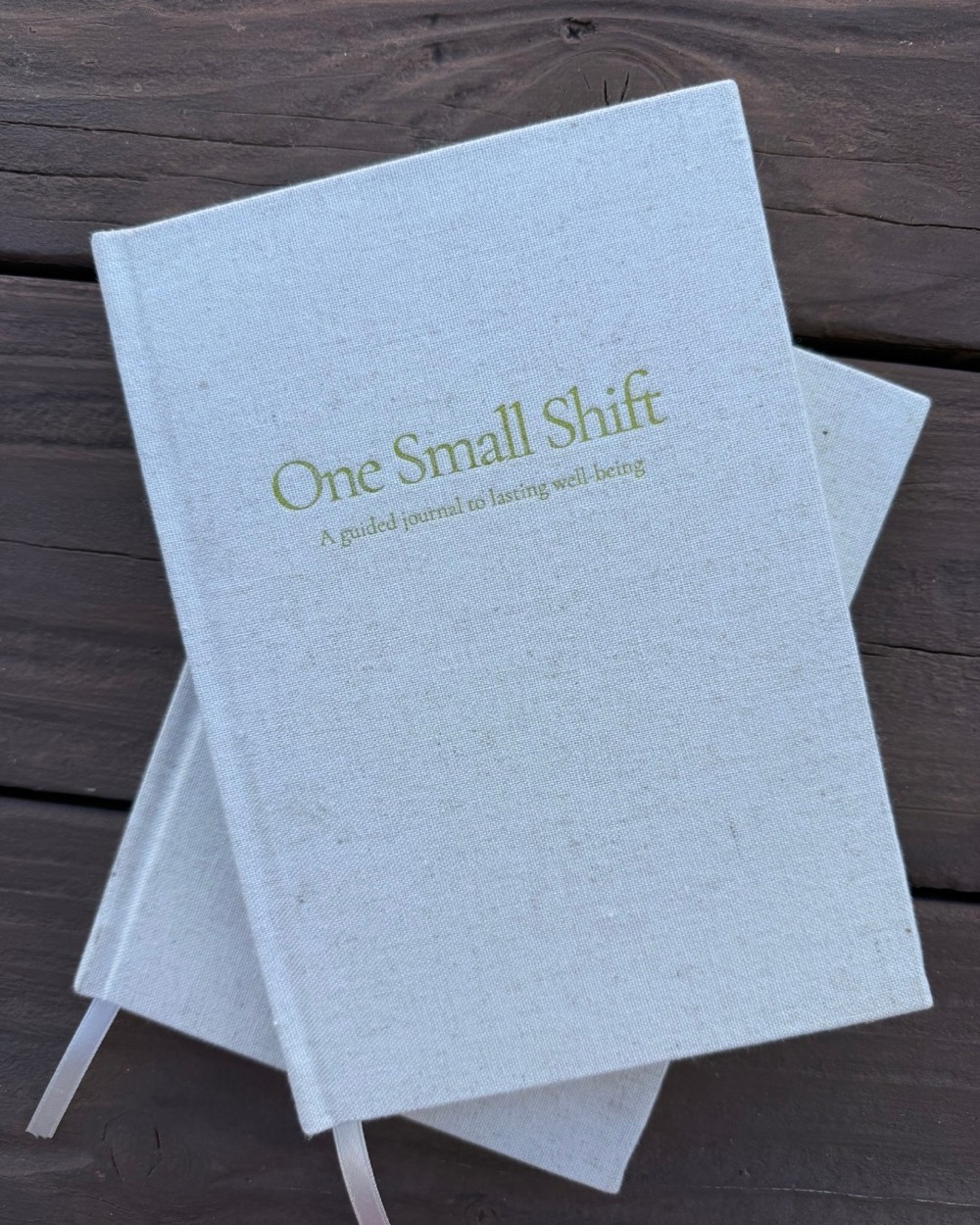
Two years, one box
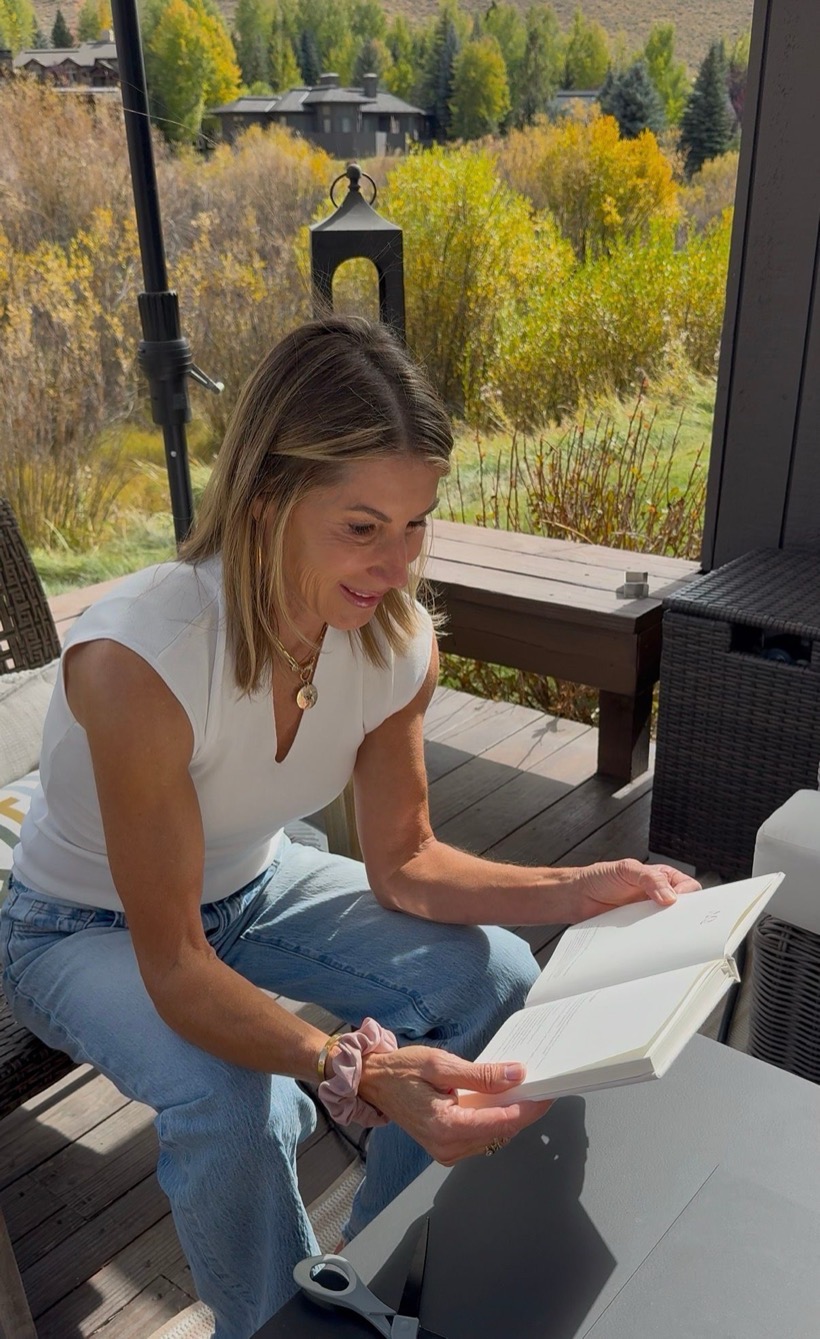
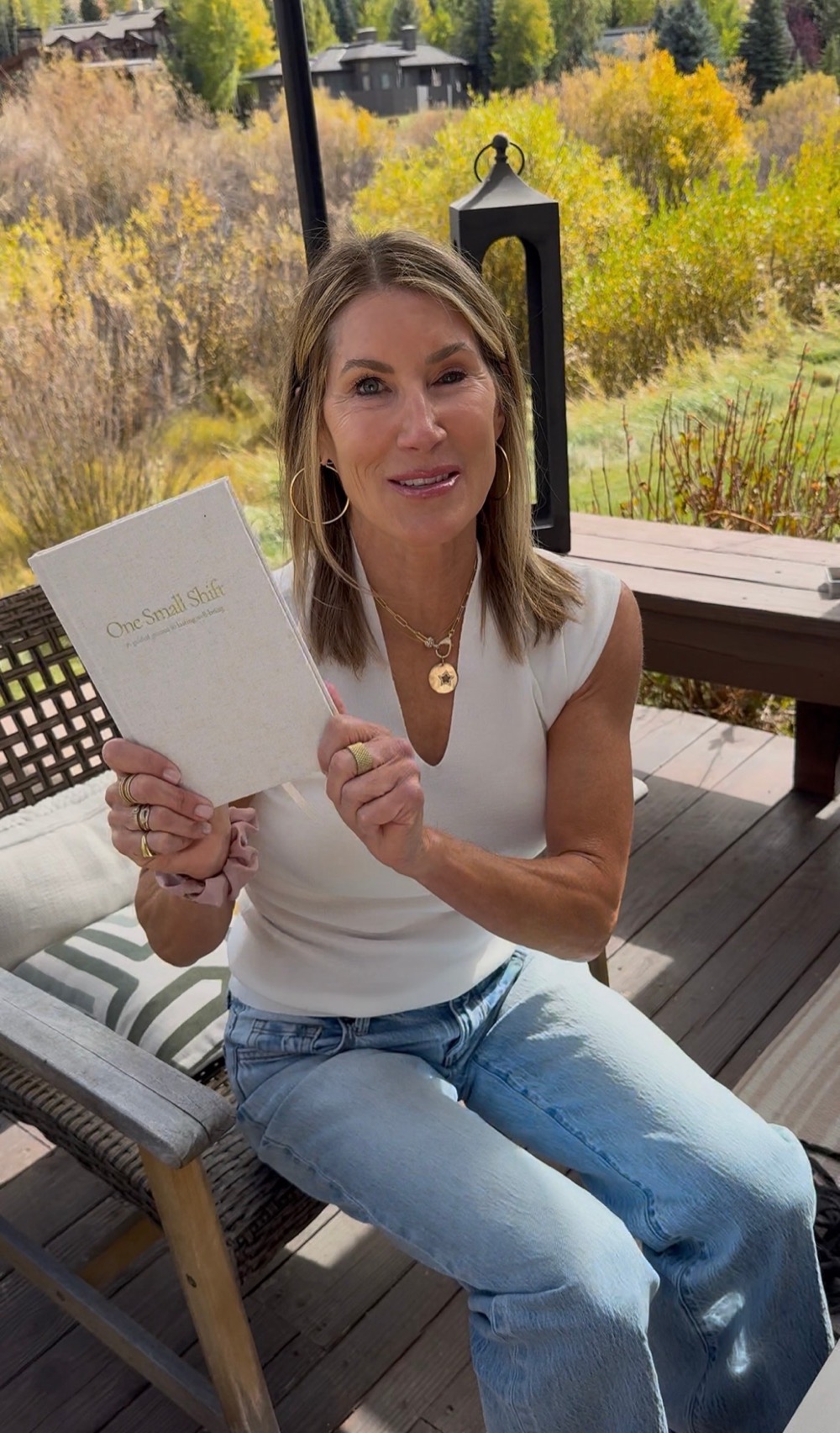
The final copy of One Small Shift arrived on a fall afternoon, and I opened it on my deck with the aspens turning gold behind me. Two years of researching, writing, rewriting and second-guessing, and there it was in my hands.
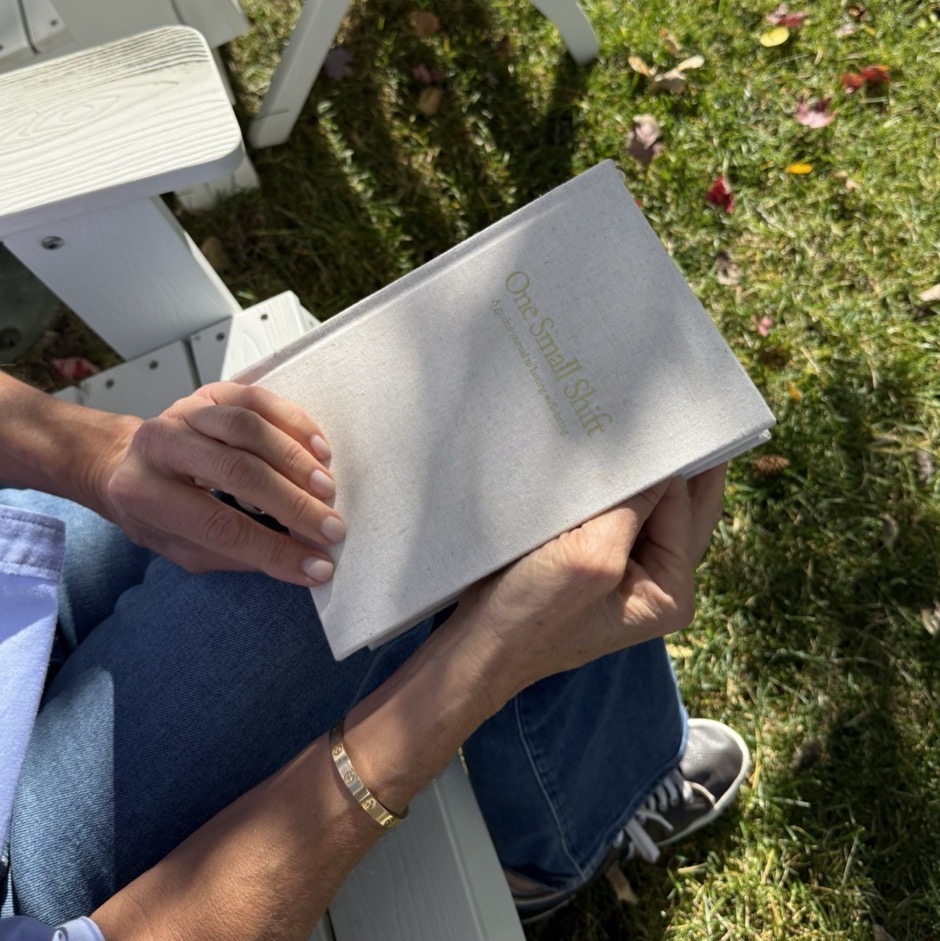
I can’t stop touching the cover. It’s linen, soft and a little textured, exactly how I pictured it back when this journal was a messy Google Doc. But the cover isn’t why I made it. Here’s what’s inside, and why I think it’s different from every other wellness journal on the shelf.
Why I wrote my own
There are thousands of journals out there. Some are so pretty you’re afraid to write in them. Others give you a prompt for every minute of the day and leave you feeling behind by Wednesday.
I wanted something in between: a journal that guides you without bossing you around, and teaches you why each page is there.
That’s where my background as a journalist came in. My job has always been asking questions, checking sources and cutting anything that doesn’t earn its place. I wrote this journal the same way. I read the research on journaling, habits and reflection, kept what holds up, and edited it again. And again.
It teaches you before you write a word
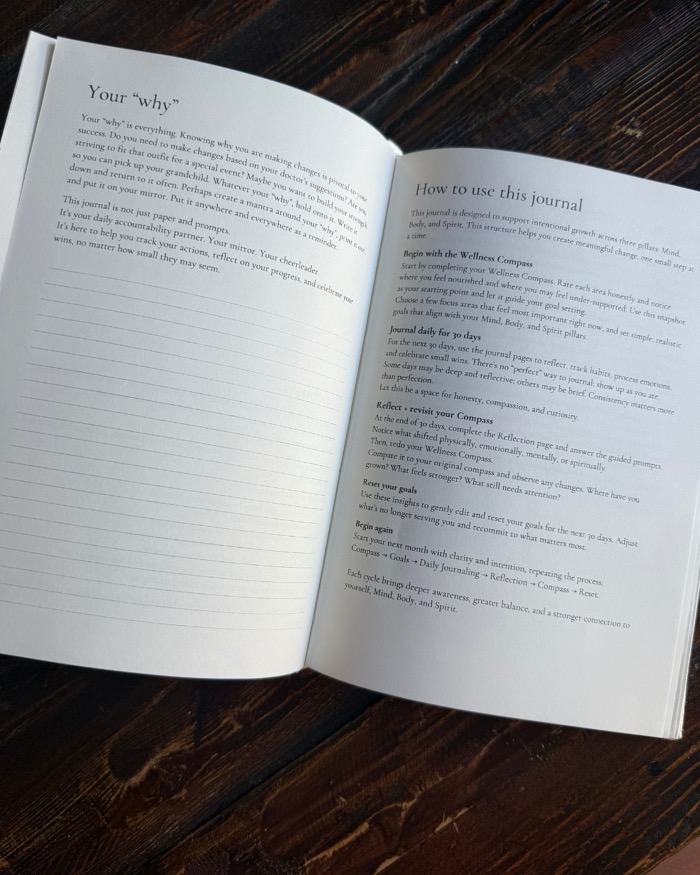
The first pages aren’t blank. They walk you through how to use the journal, starting with your why.
Maybe it’s your doctor’s advice. Maybe it’s an event on the calendar, or wanting to be strong enough to pick up your grandkids. Whatever it is, I ask you to write it down and come back to it often. Your why is what carries you on the hard days.
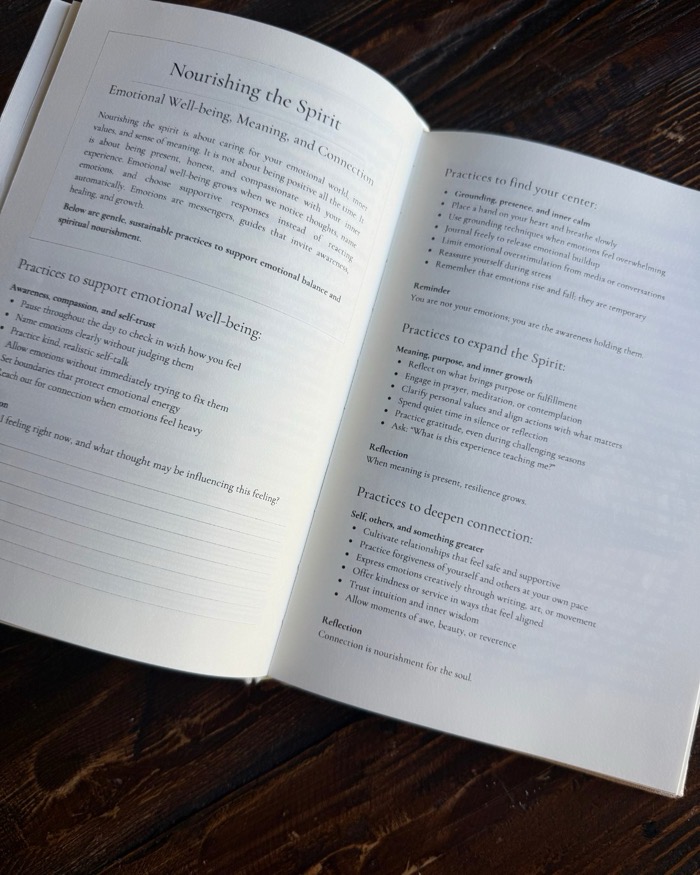
Then the journal introduces the three pillars it’s built on:
Pillar one
Mind
How you think, focus and feel. Practices include starting the day without your phone for 20 to 30 minutes and writing down repetitive thoughts so you can question them.
Pillar two
Body
The vessel that carries you. Practices include regular meals, early natural light and choosing movement that feels supportive, not punishing.
Pillar three
Spirit
Your sense of meaning and connection. Practices include naming emotions without judging them, gratitude and quiet reflection.
You don’t need to fix your mind, you need to befriend it.
The Wellness Compass
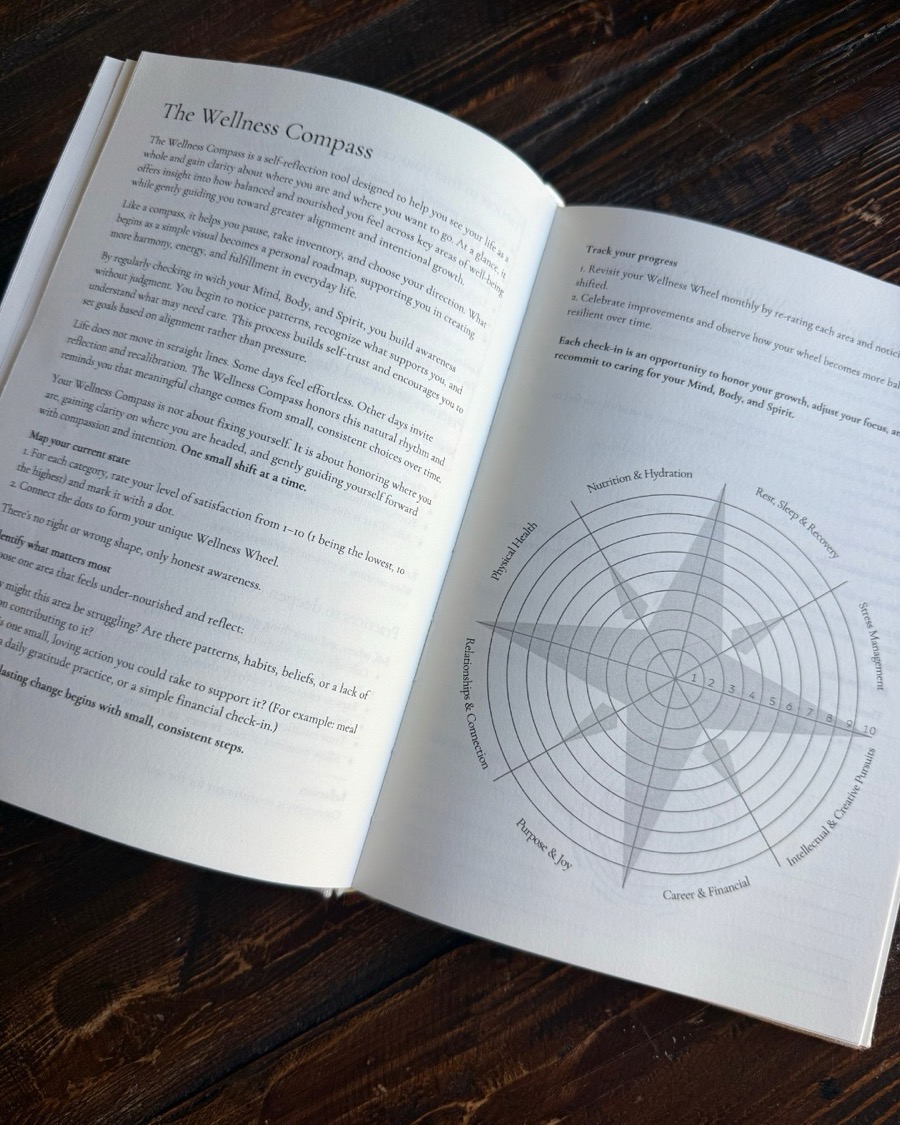
Before you set a single goal, you map where you are. The Wellness Compass has you rate eight areas of your life from 1 to 10:
- Physical health
- Nutrition and hydration
- Rest and recovery
- Stress
- Intellectual and creative life
- Career and finances
- Relationships
- Purpose and joy
Connect the dots and you get your own Wellness Wheel. There’s no right or wrong shape, only honest awareness. The area that needs attention isn’t always the one you’d guess.
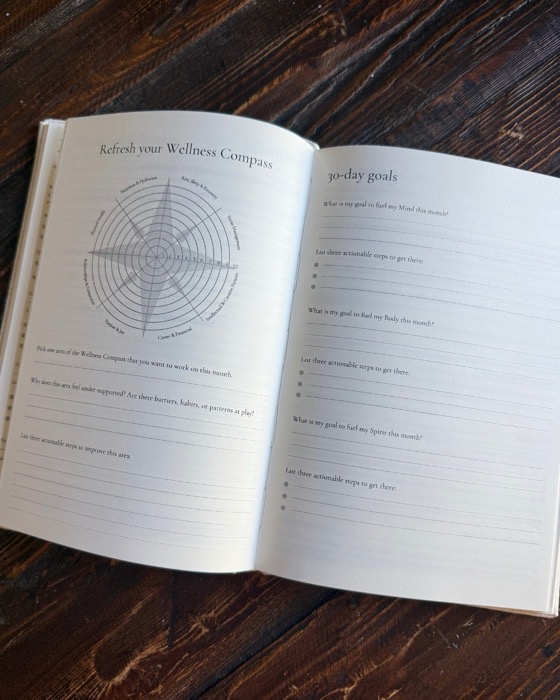
From there, the journal gives you a rhythm to repeat every month:
The monthly rhythm
Six steps, repeated every 30 days.
- CompassRate all eight areas and see your starting shape.
- GoalsSet one small goal each for mind, body and spirit.
- Daily journalingMorning and evening pages for 30 days.
- ReflectionAnswer the month-end prompts. Notice what shifted.
- CompassRe-rate and compare it to your first wheel.
- ResetKeep what works, release what doesn’t.
Then begin again, with clearer goals.
Each lap shows you what shifted, what feels stronger and what still needs care. Then you start again with clearer goals.
Inside the daily pages
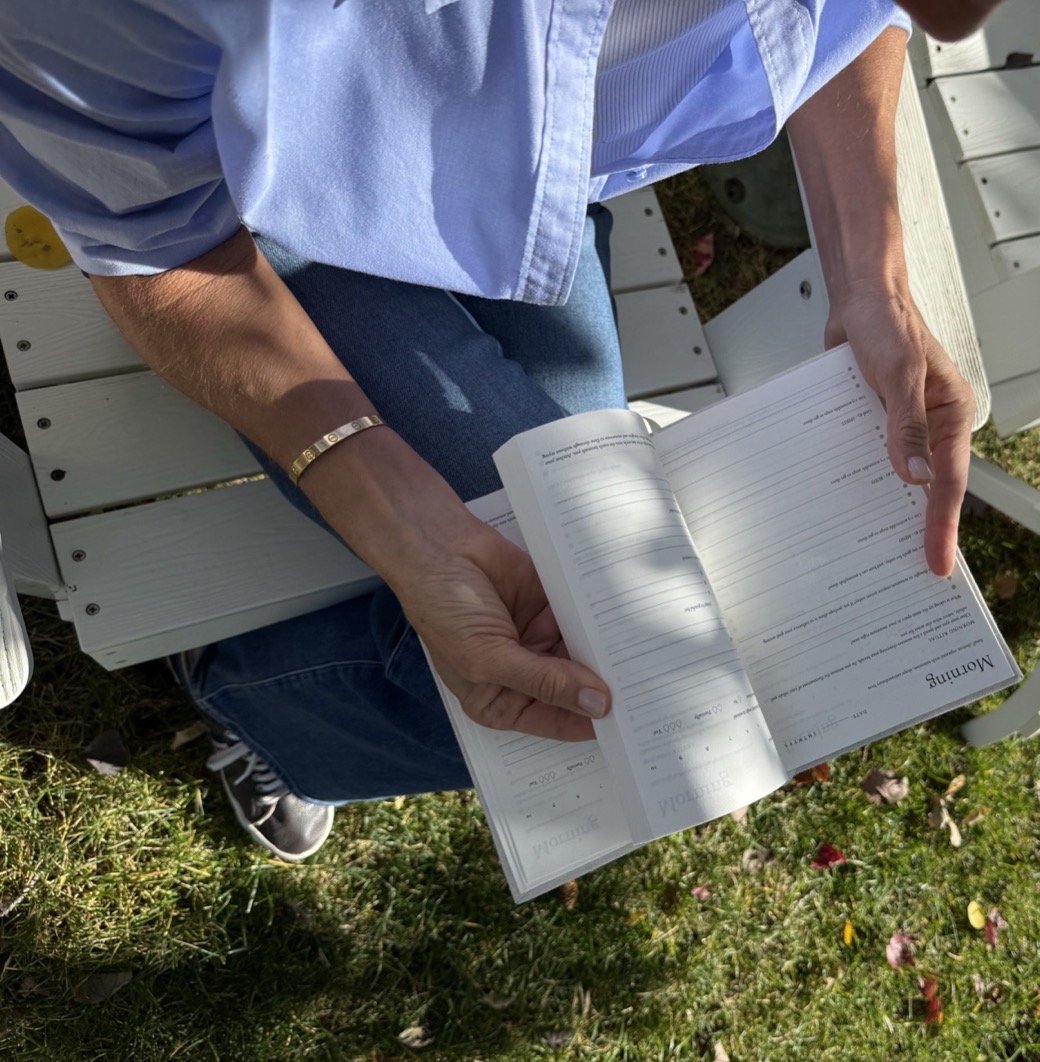
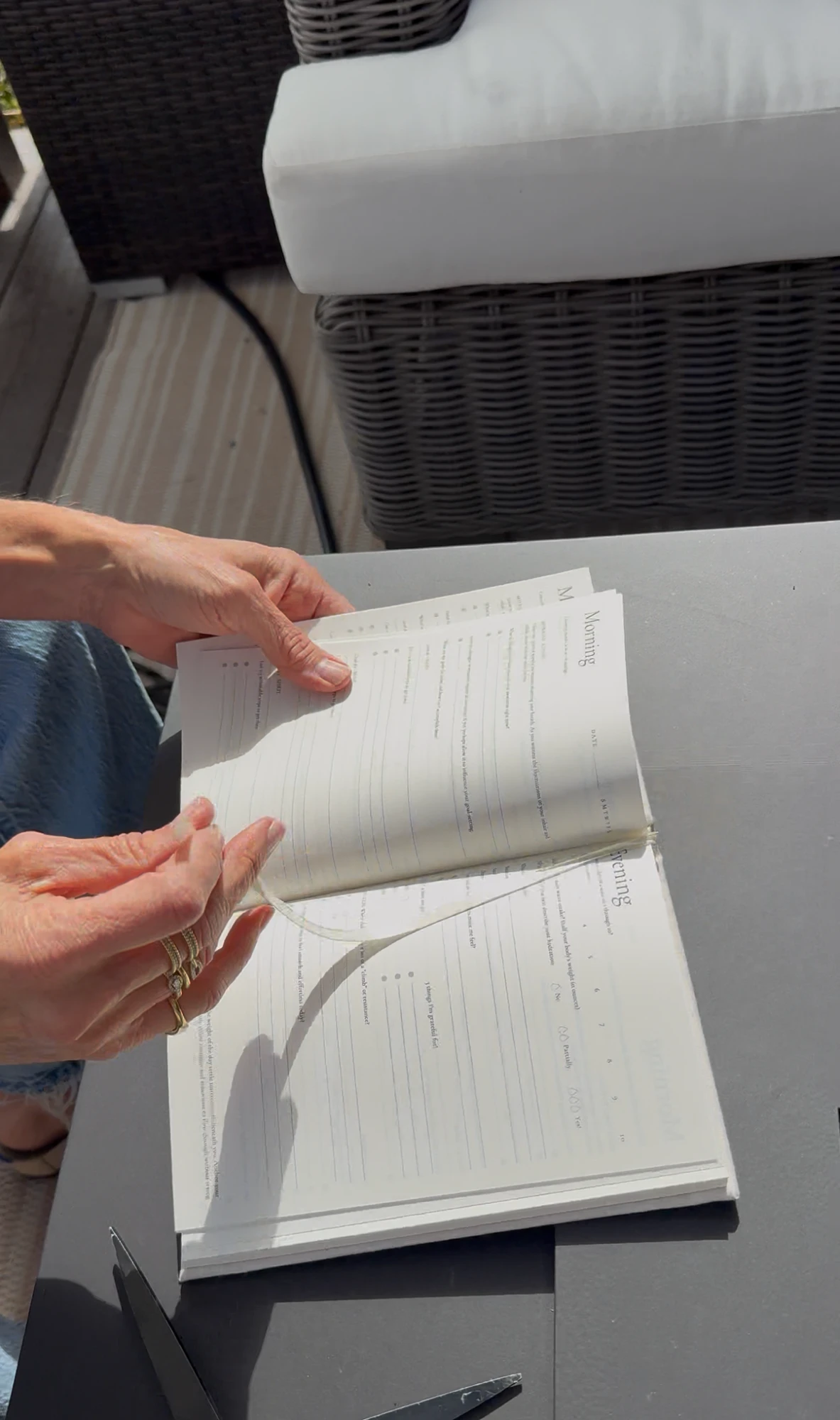
Every day has a morning page and an evening page. Each takes a few honest minutes, not an hour of homework.
Morning opens with a short breathing ritual and one question: what is taking up the most space in your awareness right now? Then you set three goals for the day, one each for mind, body and spirit, with one to three steps to get there.
Evening closes the loop. You rate your day from 1 to 10, check your water, note what you ate and how it made you feel, and list three things you’re grateful for.
Then come the two questions I love most:
Friction
Where did I notice a bit of a climb or resistance today?
Flow
Where did things feel smooth and effortless?
After a week or two, patterns show up that you’d never spot otherwise.
Why small shifts work
You’ve probably heard it takes 21 days to build a habit. The research says otherwise.
In a 2009 University College London study, it took people an average of 66 days for a new habit to feel automatic. The range ran from 18 to 254 days, depending on the person and the habit.
That’s why One Small Shift works in months, not days. We are not doing the New Year, New Me thing where you go all in for five days and burn out. The journal asks for small, realistic goals that stretch you a little without overwhelming you, then a monthly check-in to see what’s sticking.
Writing at the end of the day has research behind it too. In a 2018 Baylor University sleep study, people who spent five minutes writing a to-do list before bed fell asleep about nine minutes faster than people who wrote about what they’d already done. Getting things out of your head and onto paper helps.
Who it’s for
One Small Shift is for you if you want to:
- Understand your body by noticing patterns
- Build healthy habits that actually stick
- Feel stronger, sleep better and think more clearly
- Figure out which habits are helping you, and which ones aren’t
- Track new longevity or wellness strategies in one place
You don’t need to be a journaling person. Some days your entries will be deep, and some days they’ll be three lines. Consistency matters more than perfection.
Amazon presale
Be the first to hold One Small Shift
Presales open on Amazon soon. Leave your email and I’ll send you a note the day it’s ready to order, plus a few small shifts to try while you wait.
The signup form is on its way. Please check back soon.