Adaptogens, Explained Without the Hype
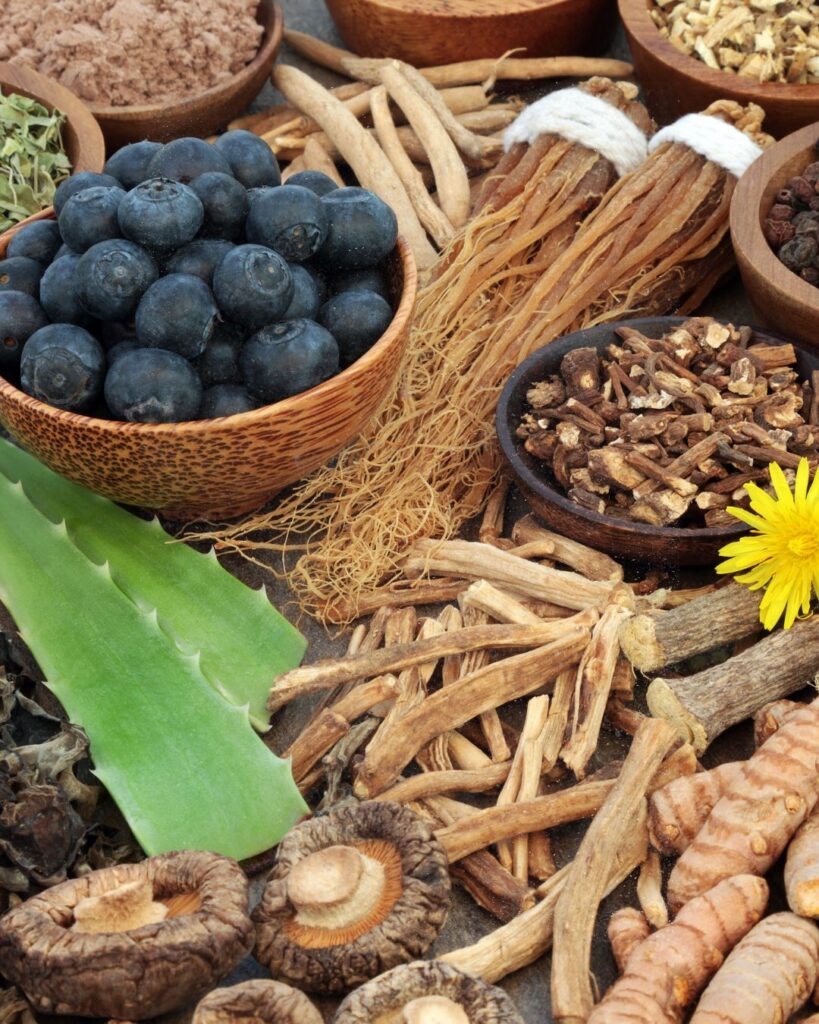
Walk down any supplement aisle or scroll for more than a few minutes online, and you will run into them: ashwagandha in your latte, rhodiola in your pre-workout, reishi in your evening tea. Adaptogens have gone from a niche corner of herbal medicine to one of the buzziest words in wellness. And with that popularity comes a familiar problem. The claims get louder than the evidence.
So let’s slow down and look at this the way I try to look at everything: with curiosity, honesty, and respect for both tradition and science. Here is what adaptogens actually are, what the research genuinely supports, and what you should know before you add one to your routine.
What is an adaptogen, really?
The term describes a small group of plants and mushrooms traditionally used to help the body cope with stress. The concept is that these botanicals help the body adapt to physical, chemical, and biological stressors and return to a state of balance. Two of the most researched are ashwagandha (Withania somnifera) and rhodiola (Rhodiola rosea), and they anchor most of the credible science we have.
This isn’t a new idea dressed up in modern packaging. Ashwagandha has been used in Ayurvedic medicine for centuries, and rhodiola has a long history in traditional practice across Europe and Asia. What’s newer is that researchers have started putting these traditional uses through the lens of clinical trials to see what holds up.
What the research actually supports
Here is where it gets interesting, and where I want to be precise, because this is exactly the kind of topic where nuance gets lost.
The active compounds in ashwagandha, primarily a group called withanolides, appear to influence the body’s central stress-response system, known as the hypothalamic-pituitary-adrenal (HPA) axis, along with pathways involved in inflammation and the calming neurotransmitter GABA. Clinical trials using standardized ashwagandha extracts have shown reductions in stress-related biomarkers, along with improvements in reported stress, sleep quality, and mood.
A 2023 systematic review looking specifically at cortisol, one of your main stress hormones, found that ashwagandha supplementation was associated with reduced cortisol levels in stressed adults. Multiple meta-analyses have also found meaningful reductions in stress and anxiety compared with placebo, and ashwagandha shows fairly consistent benefits for sleep onset and overall sleep quality, a finding researchers connect to its effect on GABA signaling.
Rhodiola tells a slightly different story. Rather than dialing down pressure, it seems better studied for performing under it. Reviews of the research point to rhodiola’s ability to combat stress-related fatigue, low mood, and mild anxiety, and some evidence supports improved endurance and reduced perceived exertion during physical activity. Notably, rhodiola tends to show measurable effects relatively quickly, sometimes within days, while ashwagandha’s benefits for anxiety and sleep typically build over two to four weeks. In fact, the European Medicines Agency has approved rhodiola’s traditional use for the temporary relief of stress symptoms such as fatigue and exhaustion, a decision based on its long history of use and supporting studies.
So yes, there is real substance here. This isn’t snake oil. But the researchers themselves are consistently careful, and so should we be.
The honest limitations
Nearly every serious review of adaptogens lands on the same set of caveats, and I think you deserve to hear them plainly.
The studies vary widely in quality. Many involve small numbers of participants and short timeframes. The extracts used differ from trial to trial, which makes results hard to compare and hard to translate to whatever product is on the shelf in front of you. Effect sizes vary considerably between studies. And some research carries potential funding bias, since supplement companies sometimes sponsor the trials. Researchers repeatedly call for larger, longer, more standardized studies before making strong clinical recommendations.
In plain terms: the direction of the evidence is promising, but it is not the same as the rigorous, decades-deep evidence base behind, say, exercise or sleep. Adaptogens are a possible support, not a proven cure, and definitely not a shortcut around the fundamentals.
What adaptogens can’t do
This is the part the marketing tends to skip.
An adaptogen cannot replace sleep. It cannot undo chronic stress you are not addressing. It cannot substitute for nourishing food, movement, connection, and rest. If your foundations are shaky, no capsule is going to carry the weight, and pinning your hopes on one usually means the real work keeps getting postponed.
I see adaptogens the way I see most supplements: potentially a helpful add-on for some people, sitting on top of a solid foundation. Never the foundation itself.
Safety: the conversation that matters most
This is where I want you to slow down and read carefully, because “natural” does not mean “harmless,” and adaptogens are a genuine example of why that distinction matters.
Ashwagandha is generally well tolerated by healthy adults at standard doses, and most people who take it experience nothing more than mild effects, if any. But there are real, documented safety considerations:
- Liver injury. There have been documented case reports of ashwagandha-associated liver injury, including a case series published in Liver International and cases tracked by the NIH’s LiverTox resource. These appear to be uncommon and idiosyncratic, but they are real. Anyone with liver disease or taking medications that stress the liver should avoid it or speak with a doctor first.
- Pregnancy and breastfeeding. Ashwagandha is considered an absolute contraindication in pregnancy, and traditional texts have used it to induce contractions. It should be avoided entirely while pregnant, while breastfeeding, and while actively trying to conceive.
- Thyroid conditions. Ashwagandha can raise thyroid hormones. That may be a concern for people with hyperthyroidism or Graves’ disease, and anyone with a thyroid condition should involve their doctor.
- Medication interactions. The National Center for Complementary and Integrative Health notes possible interactions with medicines for diabetes, blood pressure, thyroid conditions, immune-suppressing drugs, sedatives, and anticonvulsants. Because of its calming activity, it may also amplify the effect of sedatives and sleep medications.
None of this is meant to scare you off. It’s meant to treat you like the capable adult you are, someone who deserves the full picture, not just the pretty half. The people who most need to be cautious, those who are pregnant, managing a health condition, or taking prescription medication, are often the very people a wellness trend forgets to mention.
How to approach adaptogens wisely
If you’re curious and you’ve checked with your doctor, here’s the grounded approach I’d suggest:
- Foundations first, always. Sleep, whole foods, movement, and stress management do the heavy lifting. An adaptogen is a supporting actor, not the star.
- Talk to your doctor before starting, especially if you’re pregnant, nursing, trying to conceive, managing any health condition, or taking any medication.
- Quality and sourcing matter enormously. Supplements are loosely regulated, and what’s on the label isn’t always what’s in the bottle. Look for standardized extracts and third-party testing.
- Keep your expectations realistic. Meaningful, but modest. If a product promises to transform your entire life, that’s your signal to be skeptical, not sold.
- Give it time and pay attention. Notice how you actually feel, and stop if something feels off.
The bottom line
Adaptogens are one of the rare wellness trends with genuine history and a growing body of real research behind them, particularly ashwagandha for stress, anxiety, and sleep, and rhodiola for fatigue and resilience under pressure. That’s worth being curious about.
But curiosity and caution belong together. The evidence is promising, not conclusive. The safety considerations are real and deserve respect. And no adaptogen will ever replace the quiet, unglamorous fundamentals that your wellbeing is actually built on.
Support, not a magic fix. Foundations first, expectations realistic, and your doctor in the loop. That’s how you explore something like this in a way that truly honors your body.
This article is for educational purposes and is not medical advice. It is not intended to diagnose, treat, cure, or prevent any condition. Always consult a qualified healthcare provider before starting any new supplement, especially if you are pregnant, breastfeeding, managing a health condition, or taking medication.
Sources
- Clinical evidence for the adaptogenic effects of Withania somnifera and Rhodiola rosea – A systematic review. Annals of Agricultural and Environmental Medicine (2025). https://www.aaem.pl/Clinical-evidence-for-the-adaptogenic-effects-of-Withania-somnifera-and-Rhodiola,213417,0,2.html
- Ashwagandha as an Adaptogenic Herb: A Comprehensive Review of Immunological and Neurological Effects. NCBI/PMC. https://www.ncbi.nlm.nih.gov/pmc/articles/PMC12680924/
- Della Porta M, et al. Effects of Withania somnifera on cortisol levels in stressed human subjects: a systematic review. Nutrients (2023). https://doi.org/10.3390/nu15245015
- Studies deliver scientific evidence for Rhodiola rosea and Ashwagandha’s stress-reducing properties. Nektium / European Journal of Medicinal Plants review. https://nektium.com/studies-deliver-scientific-evidence-for-rhodiola-rosea-and-ashwagandhas-stress-reducing-properties/
- European Medicines Agency herbal monograph on Rhodiola rosea (2011).
- Ashwagandha-Induced Liver Injury Case Series. Liver International (2020), and NIH LiverTox. https://www.ncbi.nlm.nih.gov/pmc/articles/PMC10459262/
- Evaluating the Safety of Ashwagandha as a Food Additive: Reproductive, Thyroid, and Immune System Effects. PubMed (2025). https://pubmed.ncbi.nlm.nih.gov/41454545/
- UK Food Standards Agency / Committee on Toxicity (COT) review of ashwagandha safety (2025).
- National Center for Complementary and Integrative Health (NCCIH), ashwagandha interaction and safety guidance.